
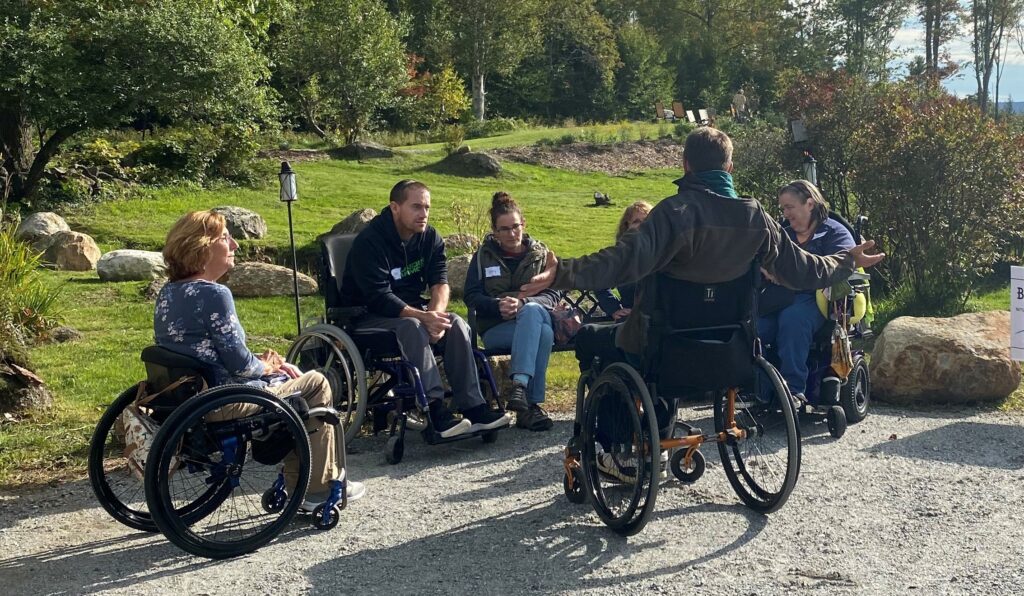
There’s a particular kind of power that comes from being in a place where you don’t have to explain yourself. Where no one asks, “What happened?” first. Where you can show up as a whole person, curious, tired, funny, frustrated, hopeful, without being reduced to a single part of your story.
Across the world of spinal cord injury (SCI), shared experiences create those spaces. They might look like a peer mentor showing someone how to use a sports wheelchair for the first time. At times they’re quieter moments: talking honestly about mental health, body changes, or the emotional whiplash that can come with big life transitions. And sometimes they’re just about laughing, especially at the absurd comments people have heard in public more times than they can count.
These connections matter because they make room for both grief and growth, often at the same time. People can talk about what’s hard without being rushed toward positivity. They share moments of progress that carry real weight—the first solo trip, a routine that finally works, or a workaround that makes daily life more manageable. In these spaces, learning from someone who’s lived it turns “I didn’t know that was possible” into “Maybe I can try that too.”
One grantee partner is creating that kind of opportunity by launching and sustaining regional peer support groups that meet consistently each month, both in person and over Zoom. These groups bring together people living with SCI and caregivers to connect with trained peers, talk openly, and navigate real-life needs. This includes finding rehabilitation services and transportation, as well as locating adaptive equipment and mental health support. For many participants, especially those in areas with limited access to resources, these gatherings have become a steady source of understanding and support.
Other grantee partners focus on shared experience through action. Accessible community outings, adaptive recreation, and structured mentorship give people the chance to try things they once believed were out of reach, regardless of how long they’ve been living with SCI. From spending a day exploring museums with peers to building confidence through weekly mentorship and advocacy projects, these occasions help people re-engage with their communities and see themselves differently. Not because someone told them what was possible, but because they experienced it firsthand.
At the Craig H. Neilsen Foundation, we support organizations that create and protect these kinds of spaces. Because progress in the world of SCI doesn’t only come from innovation or research, it also comes from listening, learning, and recognizing the quiet power of being understood.